
Researching what moves people to do the good they already know they should do.
A non-profit research and education centre studying meaning, motivation, will, feedback, leadership formation, and meaningful execution.
People often know what matters before they act on it.
They know the work that should be done. They know the habit that has weakened. They know the decision that keeps being delayed. They know the responsibility that has become harder to carry.
Yet the known good does not always become lived action.
The Center for Motivation Research studies this gap.
Our work brings together research, counselling, philosophy, education, and field practice. We are interested in motivation because we are interested in human formation: how a person recognises the good, strengthens the will, receives feedback from reality, and returns to meaningful action with clearer judgement.

A person can sincerely intend the good and still drift away from it.
The founder begins the week with one meaningful priority.
By Thursday, the inbox has been answered, the client messages have moved, the urgent problems have been handled, and the week feels full. Yet the one piece of work that would have changed the business has been moved forward again.
The leader knows the conversation that needs to happen. He rehearses it privately. He delays it publicly.
The person who wants a better life makes a serious decision on Sunday night, then watches the ordinary pressures of the week slowly reclaim him.
This is the practical condition the Center studies.
Drift rarely arrives as open rebellion against the good. More often, it arrives through small permissions, tired compromises, vague priorities, weak review, and the absence of a structure that brings intention back into contact with reality.
The problem is larger than productivity. It touches meaning, attention, will, feedback, habit, environment, character, and leadership formation.
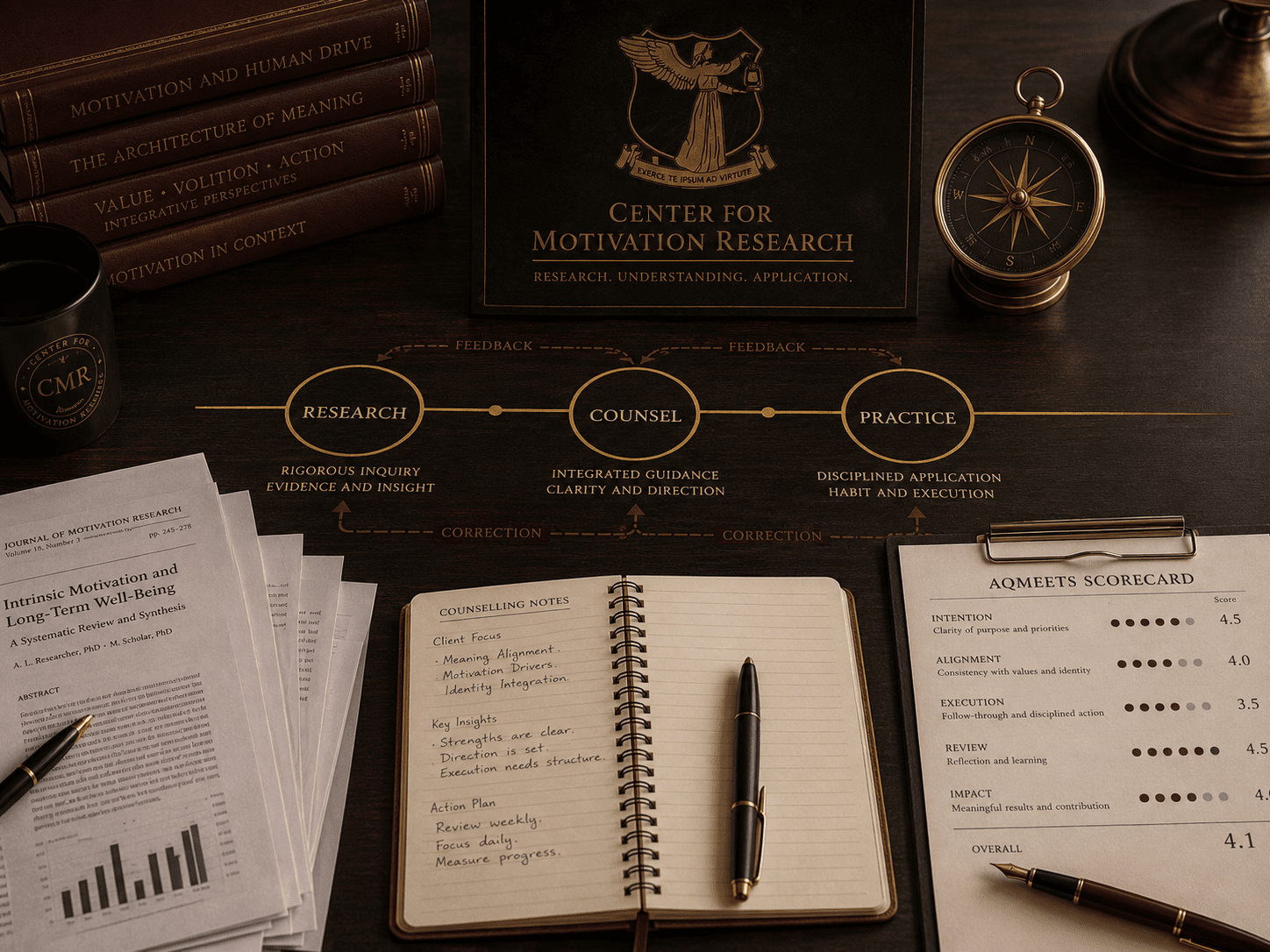
The modern person is often informed, advised, stimulated, and connected while remaining strangely unable to return to the work he already knows matters.
What actually moves a person to do the good he already knows he should do?
This is the governing question of the Center for Motivation Research.
It belongs to private life, leadership, entrepreneurship, education, family, culture, and the good society.
A person may want many things at once. He may want comfort and growth, truth and approval, discipline and escape, meaningful work and the easier relief of distraction.
Motivation cannot be understood only by asking what a person says he wants. The deeper question concerns what finally moves him.
The Center studies what orders attention, gives action its reason, strengthens the will, exposes drift, and helps a person remain faithful after novelty has passed.
We study motivation as the movement of the whole person toward a perceived good.
That movement involves reason, imagination, memory, habit, environment, relationships, identity, discipline, and the meaning a person gives to his own action.

Current papers on attention, drift, AI, feedback, and the intention-execution gap.
The Center’s thought leadership begins with the problems already being studied and published.
These papers examine the forces that pull people away from meaningful work, the gap between insight and execution, and the structures needed to govern attention, correct drift, and return to purposeful action.
The Attention Merchants
How commercial distraction captures entrepreneurial attention and quietly widens the gap between what a founder says matters and what the week actually proves.
Why Insight Does Not Become Execution
Why good advice, strong insight, and genuine inspiration often fail to become action without rhythm, review, and correction.
AI as a Time Trap
How artificial intelligence can save time inside a task while creating new demands around review, rework, expectation, and attention.
What Is the Intention-Execution Gap?
A research overview of why people fail to do what they genuinely planned to do, even when the intention was real.
On Drift
An essay on how entrepreneurs and leaders slide away from stated aims through ordinary decisions, weak feedback, and accumulated delay.
These papers are not separate from the Center’s practical work. They provide part of the intellectual foundation for AQMeets, Leadership Counselling, and the wider work of meaningful execution.
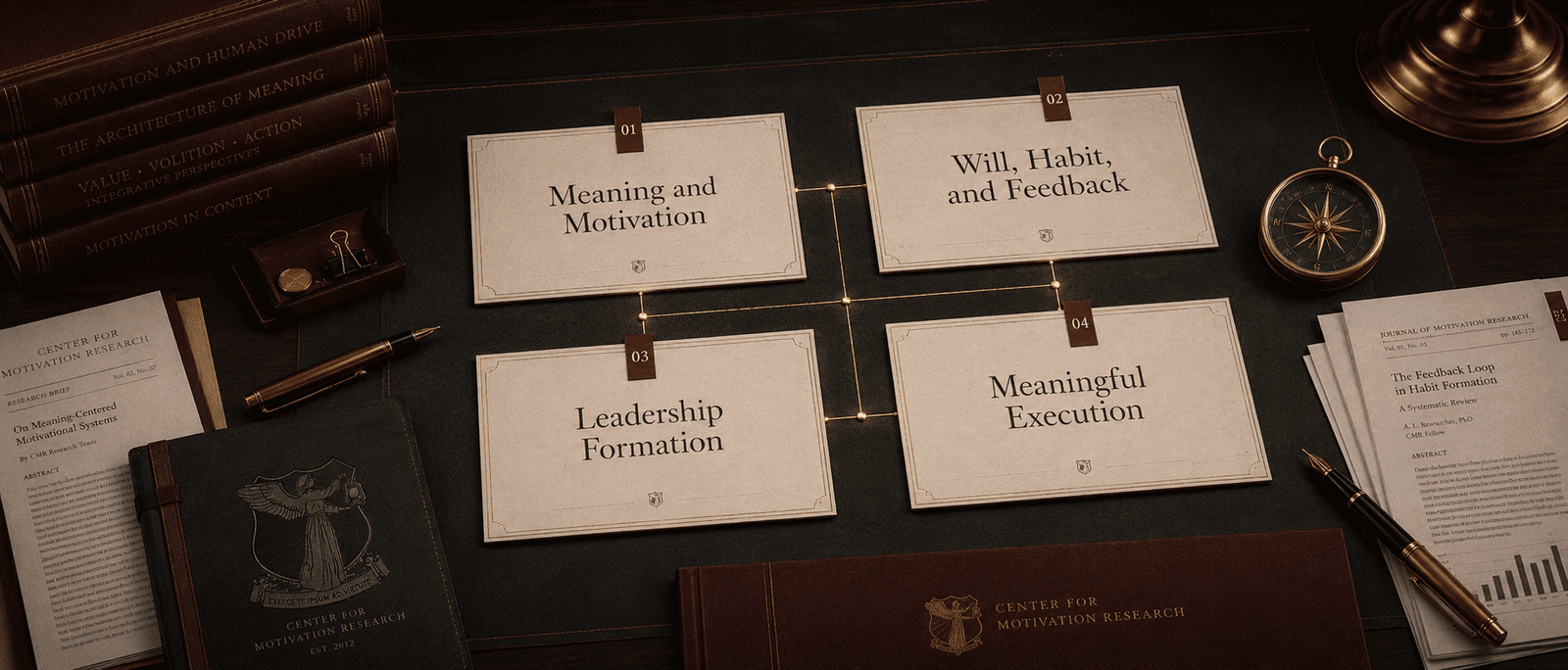
Four themes organise the Center’s work.
The Center does not need to appear larger than it is. It needs to be clear.
At present, our work is organised around four themes that return again and again across the research, counselling, and field practice.
Meaning and Motivation
We study how meaning gives action its reason, force, and direction. A person acts differently when the good becomes clearer, more personal, and more worthy of sacrifice.
Will, Habit, and Feedback
We study how intention becomes action, how habit carries or weakens the good, and how structured feedback helps a person see reality without evasion.
Leadership Formation
We study how leaders are formed through responsibility, pressure, judgement, decision, failure, calling, and stages of maturity.
Meaningful Execution
We study how important work becomes visible progress through rhythm, review, correction, accountability, and proof in ordinary time.
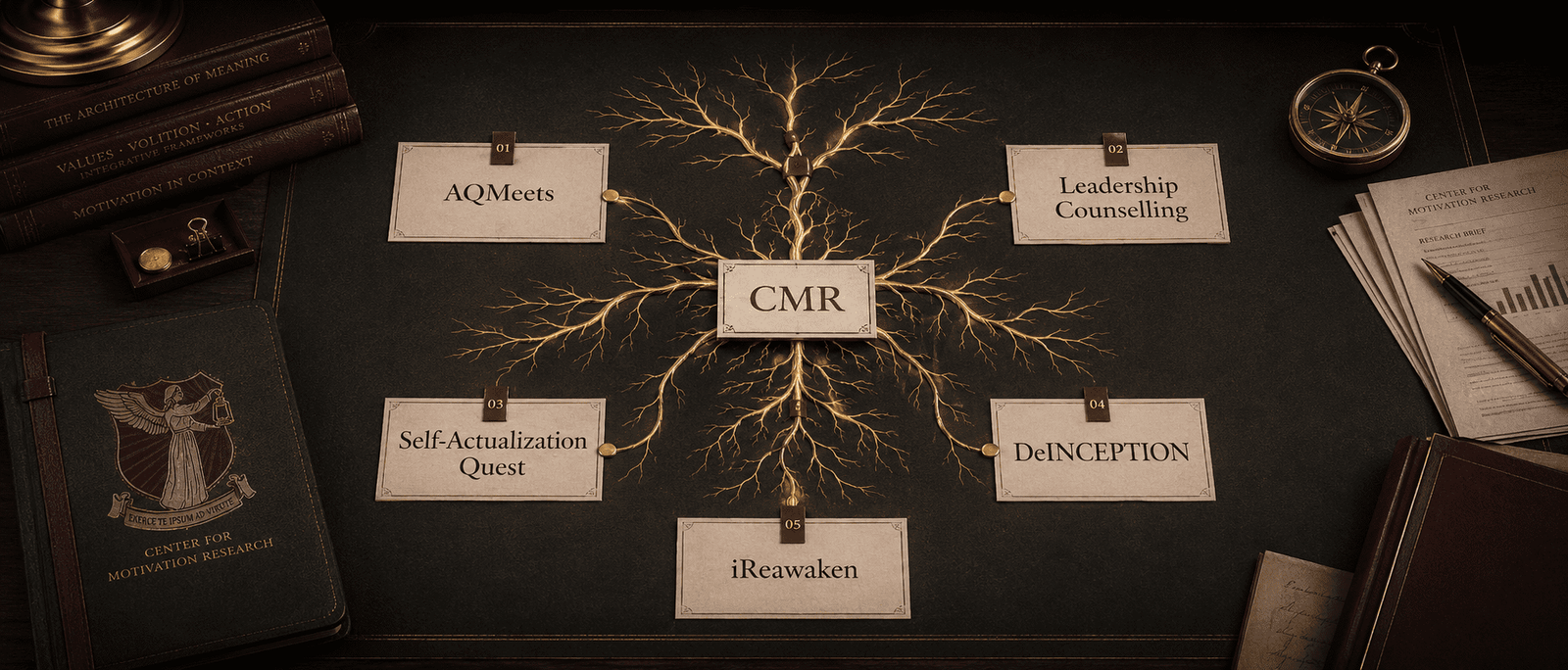
The Center’s work becomes practical through three main pathways.
Ideas must eventually meet life.
A theory of motivation has to meet the distracted founder, the overburdened leader, the person at a threshold, and the builder trying to turn intention into visible progress while ordinary pressures keep pulling him away.
The pathways are different because the questions are different.
AQMeets
A meaningful execution system for serious builders who need to review reality, correct drift, and make meaningful progress visible across the day, week, month, quarter, and year.
Best for: leaders and entrepreneurs whose meaningful work is not moving consistently.
Explore AQMeetsLeadership Counselling
Private counsel for leaders carrying responsibility, difficult decisions, repeated drift, weakened conviction, and the pressure that sits beneath public leadership.
Best for: leaders whose burden needs a private room for counsel, judgement, and interpretation.
Explore Leadership CounsellingSelf-Actualization Quest Counselling
A deeper pathway for those standing at a threshold in life, work, calling, or leadership formation, where the old pattern no longer holds.
Best for: leaders and serious seekers facing reorientation, passage, or a deeper stage of formation.
Explore Self-Actualization QuestDeINCEPTION / The Great Aha
A documentary and public philosophy project examining happiness, meaning, desire, and the hidden maps that shape human life.
Explore The Great AhaiReawaken
A motivation-mapping pathway for helping people better understand the motives, meanings, and inner movements shaping their choices.
Explore iReawaken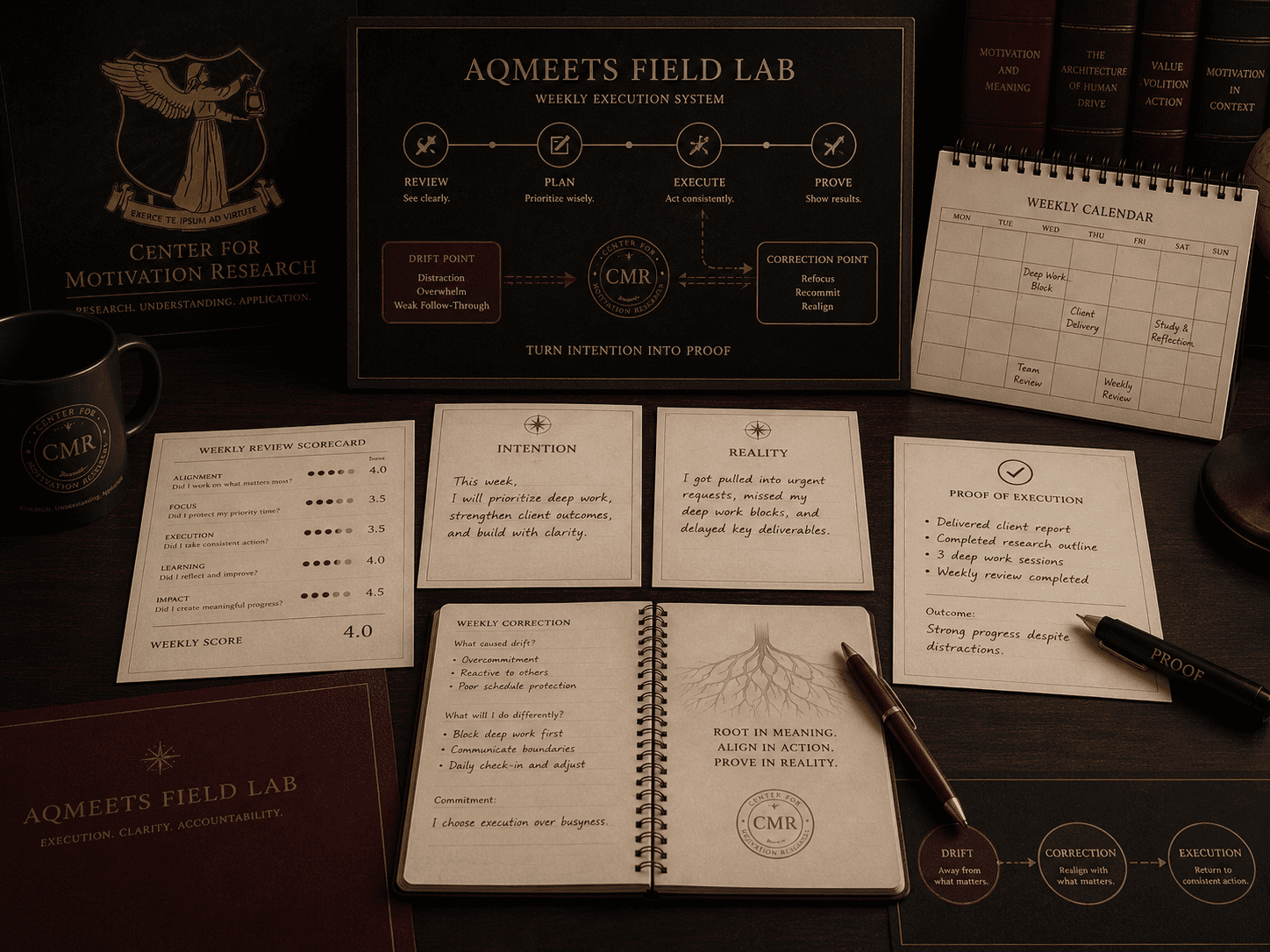
AQMeets is where our research into feedback and meaningful execution becomes weekly practice.
AQMeets applies the Center’s work in feedback analysis, self-management, habit, leadership rhythm, and meaningful action.
The central problem is simple to name and difficult to solve.
A person intends meaningful work, but reality carries him elsewhere.
The important work is not rejected. It is simply postponed, diluted, fragmented, or moved into next week. The person remains busy enough to feel justified and dissatisfied enough to know something is wrong.
AQMeets was built to close that gap.
It gives leaders and builders a disciplined rhythm of intention, reality, analysis, planning, and peer performance.
It helps them review what actually happened, locate drift, make correction, and return to meaningful work with greater honesty.
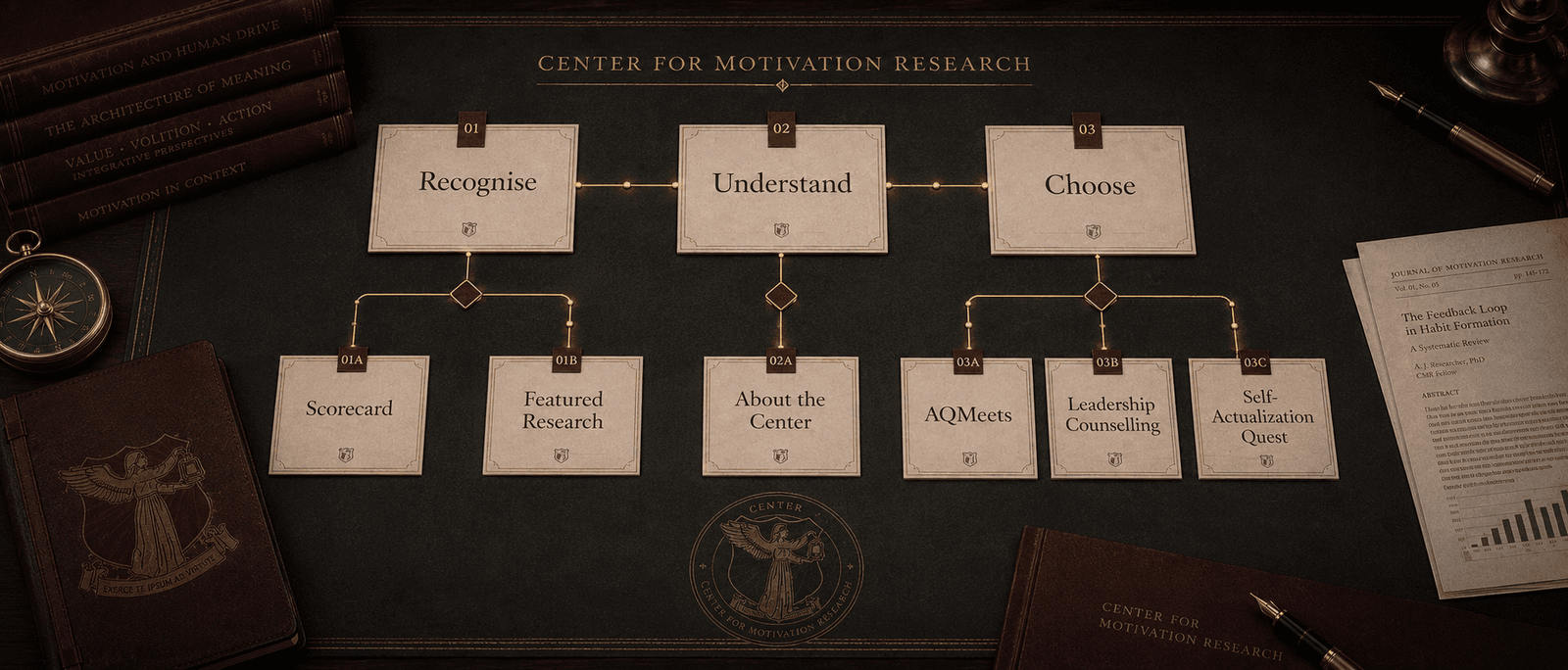
Begin according to the stage of recognition you are in.
People arrive at the Center from different places.
Some are only beginning to recognise the problem. Some are trying to understand the problem. Some are ready to choose a pathway.
The Center is designed to help people locate the real question before choosing the next step.
Recognise the Problem
For the visitor who feels the gap but cannot yet name it clearly.
- Take the Execution Scorecard
- Read the Featured Research
- Start with “On Drift” or “The Intention-Execution Gap”
Understand the Problem
For the visitor who knows the pattern is real and wants a better explanation.
- Explore the Research Themes
- Read About the Center
- Study the Featured Research papers
Choose a Pathway
For the visitor ready to act on what has become clear.
- Explore AQMeets
- Book a Leadership Counselling conversation
- Explore Self-Actualization Quest Counselling
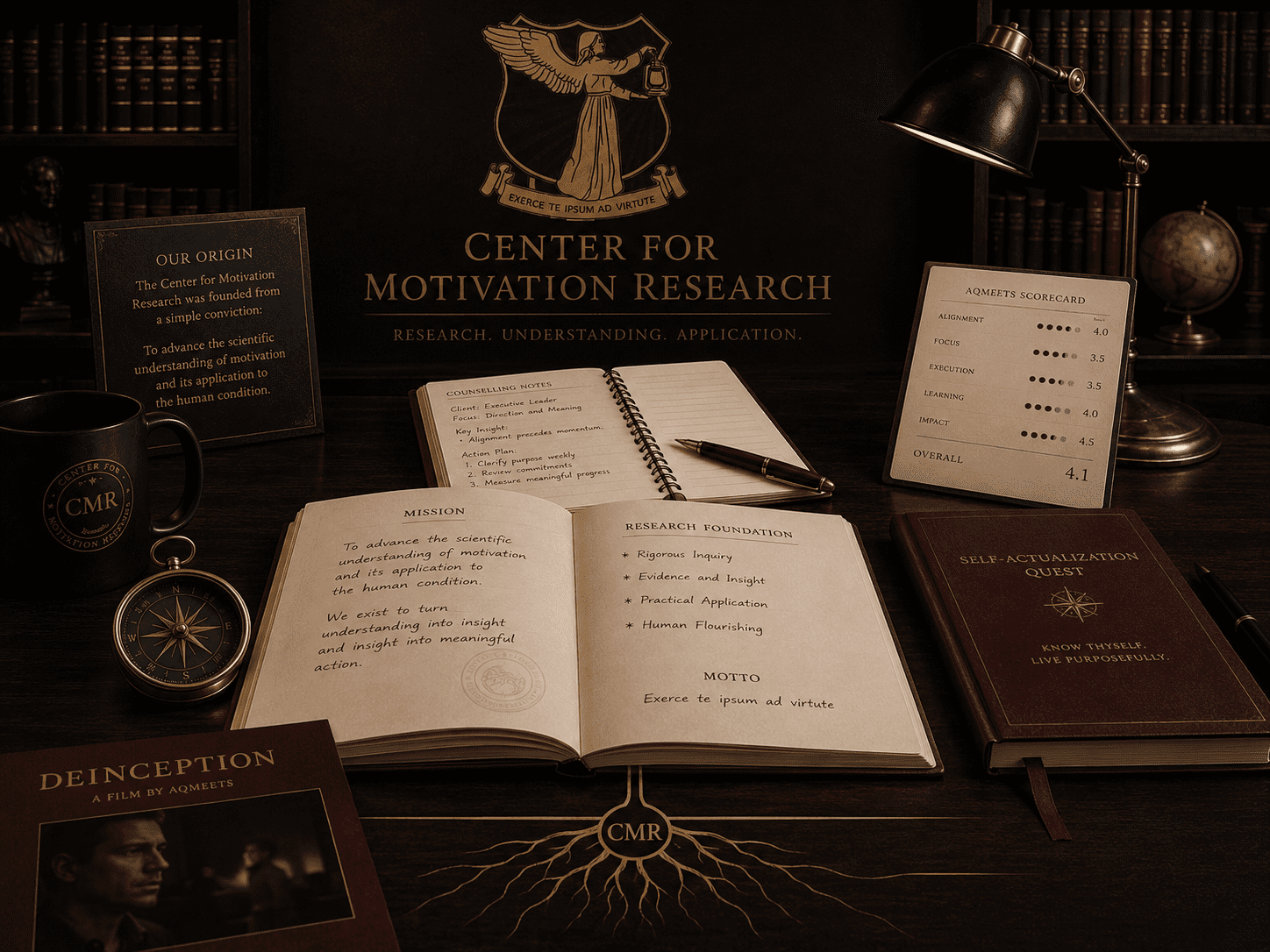
The Center gathers research, counselling, and execution practice into one institutional home.
The Center for Motivation Research Inc. is based in Australia and exists to develop a more serious understanding of motivation, leadership formation, and meaningful action.
Its work grew from a long concern with the movement from potential to actuality: how a person recognises what is good, chooses it with greater clarity, and embodies it through disciplined action.
The Center is concerned with more than individual performance.
It is concerned with the formation of people, leaders, families, institutions, and cultures.
A society is shaped by what its people believe is worth pursuing, and by whether they have the formation to pursue it.
The About page gives the fuller account of the Center’s mission, vision, origin, and leadership.

Name the question before choosing the pathway.
The movement from knowing to doing is one of the great problems of human life.
It appears in private habits, family responsibility, business leadership, education, culture, and public life.
A person knows what matters, but does not return to it.
A leader carries responsibility, but loses sight of meaning.
A founder intends meaningful work, but drifts into reaction.
The Center studies these movements so that better maps can be drawn, better practices can be formed, and more people can return to the good with clearer judgement and stronger will.
Begin with the honest question.
Is this drift? Is this a failure of review? Is this a leadership burden? Is this a threshold?
The answer determines the pathway.